
Model and agent systems
Customer or partner systems provide task understanding, visual recognition and decision-making. Models may use an external service or a separately deployed inference environment.
Integration layer · adapted per projectWe prefer to explain capability down to layers and boundaries: which layer owns compute, which owns runtime, which owns scheduling and openness, what each solves and what it cannot.
These are not parallel modules but one chain from hardware to interface.
SoC arrays and high-density servers organised into a unified compute, storage and network pool.
Custom AOSP images and a cloud runtime for instance creation, lifecycle and state control.
Containers as the unit of runtime, with layered images and isolation for consistency.
Schedule instances by load and quota while balancing utilisation and stability.
Capture, encode, transport and weak-network optimisation for interactive scenarios.
Standard APIs, authentication, callbacks and partner access to platform capability.
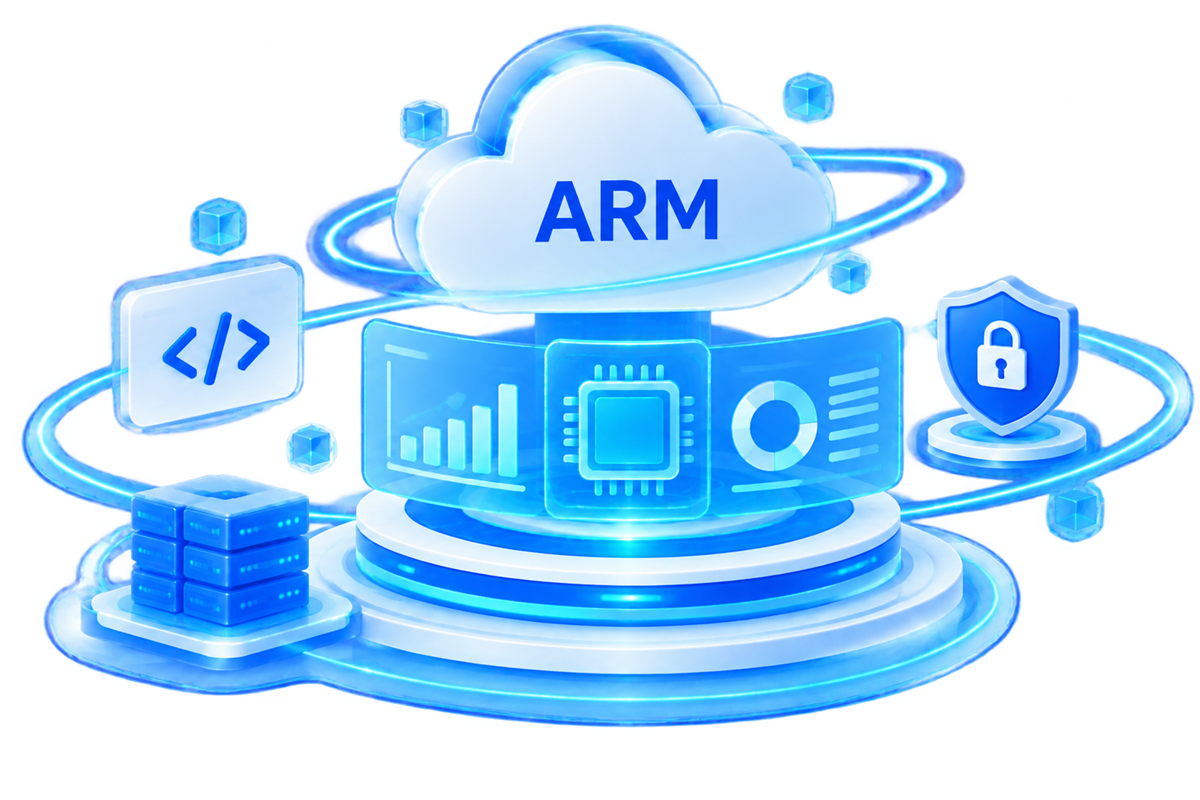
A complete layered system from ARM silicon to application services. Layers are decoupled through stable interfaces and support public, private and hybrid deployment.
This diagram explains the technical structure and component boundaries. Actual implementation and delivery scope are defined in the agreed solution.
If compute, runtime and platform capability are delivered as one block, any upgrade shakes the whole system. We keep interfaces between layers stable so hardware generations, image upgrades and platform releases can proceed separately.
The blast radius of a single-layer change can be defined.
New hardware only requires bottom-layer work; upper interfaces stay the same.
The same platform can be combined for different customer environments.
The existing technology stack gives models, platform services and mobile app environments distinct roles.
Customer or partner systems provide task understanding, visual recognition and decision-making. Models may use an external service or a separately deployed inference environment.
Integration layer · adapted per projectOpenAPI, tenant permissions and instance management connect task systems with environment allocation, status updates and run records.
Platform layer · builds on existing capabilitiesAndroid virtualization, images and remote channels provide space for app tasks, debugging and human intervention.
Runtime layer · app compatibility requires validationNote: this page and its sub-pages describe architecture and R&D directions. Specific functionality, performance and deliverables are defined by the agreed technical proposal and contract.
We can provide architecture notes, API lists and environment requirements for your scenario, and arrange a direct discussion with our technical team.